
Australia's Most Promising Private Startups to Watch
Canva may be the name everyone reaches for when people think of Australian tech, but it's far from the only story worth telling. Over the past few months, a wave of Australian-founded companies has quietly, and not so quietly, racked up unicorn valuations, closed nine-figure rounds, and pulled in some of the world's most respected investors. Space, autonomy, energy infrastructure, fintech, and healthcare AI: Australia is punching well above its weight, and the first quarter of 2026 alone saw $1.8 billion in disclosed local startup funding, according to Wholesale Investor's tracking.
Here are five private Australian startups worth watching right now, plus one honourable mention that needs no introduction.

1. Gilmour Space Technologies
What they do: Gilmour Space is building an end-to-end sovereign space capability out of the Gold Coast: designing, manufacturing, testing, and launching its own rockets and satellites. Its flagship Eris orbital launch vehicle made history as Australia's first domestic orbital launch attempt, and the company also operates the country's first licensed commercial orbital launch facility, the Bowen Orbital Spaceport in North Queensland.
Latest valuation: Gilmour crossed the $1 billion mark in January 2026 after a $217 million Series E round (A$), officially making it Australia's first space-tech unicorn. The raise builds on the company's funding trajectory, which included an earlier $146 million round.
Investors: The round was jointly led by the federal government's National Reconstruction Fund Corporation and industry super fund Hostplus, with participation from Future Fund, Blackbird Ventures, Funds SA, HESTA, NGS Super, Main Sequence, QIC, and Brighter Super, according to Gilmour's own funding announcement.
Why they're interesting: Sovereign launch capability has become a strategic priority for governments worldwide, and Gilmour is one of the few companies outside the US and China building the full stack: rockets, satellites, and launch infrastructure, all domestically. The involvement of Australia's National Reconstruction Fund signals this is being treated as critical national infrastructure, not simply a commercial bet. That said, Eris's maiden launch attempt ended in a crash after 14 seconds of flight, a reminder that hardware-heavy space startups carry real technical and timeline risk that software companies don't.
Exit potential: With SpaceX as the obvious global comparable, an eventual IPO looks like the intended path rather than an acquisition. Sovereign space capability is politically sensitive, and a foreign buyer would likely face government pushback. A successful, repeatable Eris launch cadence would be the next major value inflection point before any listing conversation gets serious.
2. Advanced Navigation
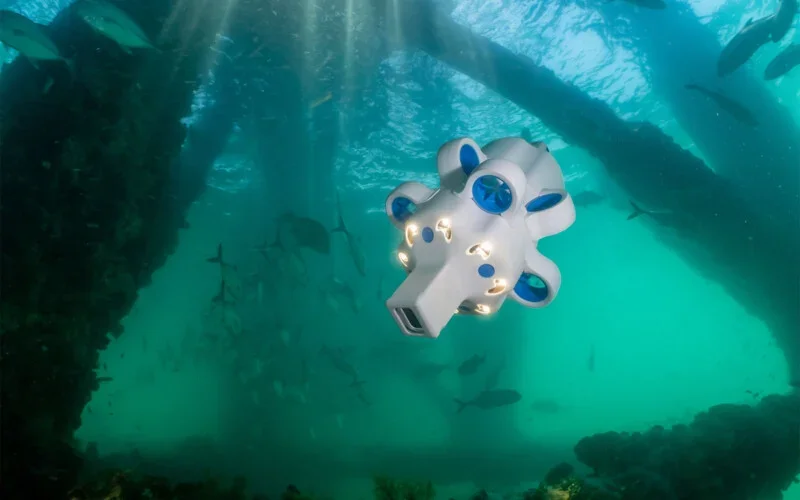
What they do: Founded by two University of Western Australia graduates out of a PhD thesis on neural-network-based sensor smoothing, Advanced Navigation builds AI-powered positioning, navigation, and timing systems that keep autonomous vehicles, submarines, mining equipment, and defence platforms oriented even when GPS is degraded, spoofed, or unavailable entirely.
Latest valuation: The company hasn't disclosed an exact number. CEO Chris Shaw told Forbes Australia only that the business is "definitely in unicorn status now," following a US$110 million Series C closed in March 2026.
Investors: Led by AirTree Ventures, with strategic participation from Quadrant Private Equity and the National Reconstruction Fund Corporation, alongside existing backers Main Sequence, KKR, In-Q-Tel, Alpha Intelligence Capital, and former Australian PM Malcolm Turnbull.
Why they're interesting: GPS dependency is increasingly framed as a systemic vulnerability rather than a mere technical limitation, given rising electronic warfare and spoofing threats. Advanced Navigation already has over 100,000 systems deployed worldwide and generates more than 80% of its revenue from the US and Europe, with projected 2026 revenue north of US$100 million. The Series C is explicitly earmarked for an aggressive acquisition strategy to expand manufacturing into the US, a rare case of an Australian deep-tech company moving from a product story to a platform, or roll-up, story.
Exit potential: Between defence-grade relevance (In-Q-Tel is the CIA's venture arm) and genuine dual-use commercial demand across mining, marine, and autonomous vehicles, this looks like a strong acquisition target for a larger defence or navigation systems player. That said, the company's own M&A ambitions and revenue scale suggest an IPO path is also plausible in the medium term.
3. Neara
What they do: Neara builds physics-enabled "digital twin" software for critical infrastructure: 3D models of power grids and utility networks that simulate how they'll behave under real-world stress like storms, load changes, or new connections. It's used by close to 90% of Australian network utilities, plus major overseas operators including Southern California Edison, ESB Networks in Ireland, and Scottish Power in the UK.
Latest valuation: A$1.1 billion, roughly US$740 million, reached via a $90 million Series D in February 2026, making it the third unicorn milestone in the current Australian tech wave.
Investors: Led by TCV (previously an investor in Netflix, Spotify, and Revolut), with returning backers Partners Group, EQT, Square Peg Capital, and Skip Capital.
Why they're interesting: Neara sits at the intersection of two of the biggest infrastructure themes right now: ageing grid capacity and the exploding electricity demand from AI data centres. Rather than requiring utilities to build new physical capacity, Neara's models can identify significant underutilised capacity already sitting in existing networks, a much faster and cheaper fix than new transmission lines. Co-founder Jack Curtis has said the company moved up its raise timeline specifically because of how urgently AI compute demand is straining power grids, a good sign of genuine pull-through demand rather than a story built to chase a hot theme.
Exit potential: Utility-facing infrastructure software with this kind of embedded, mission-critical usage tends to be attractive to both strategic acquirers (grid equipment makers, energy majors) and public markets. Given the AI-driven energy narrative currently commanding premium multiples, Neara looks well positioned for either an IPO or a strategic acquisition within a few years, particularly if US expansion continues at pace.

4. Harrison.ai
What they do: A clinician-led healthcare AI company that builds diagnostic support tools for radiologists and pathologists, its software analyses chest X-rays, CT scans, and other medical imaging to flag potential issues and prioritise urgent cases. It also has an IVF-focused embryo assessment product. More than 3,400 clinicians across 1,000+ hospitals and clinics in 40 countries now use its tools, and it holds 12 FDA clearances in the US.
Latest valuation: Third-party estimates place Harrison.ai in the low-to-mid hundreds of millions of dollars range, with total capital raised exceeding US$240 million as of its last disclosed round. The company has continued expanding through 2026 as it pushes into the US market via a new Boston base.
Investors: Blackbird Ventures, Horizons Ventures, Sonic Healthcare, Alpha JWC Ventures, Aware Super, Founders Fund, and ECP Asset Management, among others.
Why they're interesting: The clinical results are the real story here. Studies show radiologists using Harrison.ai's tools saw a substantial increase in diagnostic accuracy, with lung cancer cases identified an average of 16 months earlier. It already covers roughly half of Australia's registered radiologists and evaluates a large share of chest X-rays for NHS England, genuine, large-scale clinical deployment rather than a pilot-stage pitch. The FDA clearances and Medicare reimbursement pathway for one of its algorithms suggest a real, defensible regulatory moat is forming around the business.
Exit potential: Healthcare AI diagnostics is attracting serious strategic interest from both big medtech incumbents and large health systems looking to own the technology outright. Given the regulatory clearances already secured and the breadth of international deployment, Harrison.ai looks like a candidate for either acquisition by a global medtech or imaging player, or a longer-term IPO once US revenue scales alongside its existing UK and Australian base.
5. Airwallex
What they do: Airwallex is a global fintech platform, founded in Melbourne, offering cross-border payments, foreign exchange, and financial infrastructure for businesses operating internationally. Though now headquartered across Singapore and San Francisco, it remains one of the most significant companies to have emerged from Australia's startup ecosystem.
Latest valuation: A$16 billion, roughly US$11 billion, up 37% following a $460 million Series H round (US$320 million) closed in mid-2026, just months after a A$12 billion valuation from its Series G round the previous December.
Investors: Led by existing backer Addition, with participation from Baillie Gifford, Hummingbird, QED Investors, T. Rowe Price, Hedosophia, Haun Ventures, and Amex Ventures. Local VCs Blackbird, Square Peg, and AirTree remain among its earliest backers.
Why they're interesting: Few Australian-founded companies have reached this scale of global relevance. Airwallex is now a serious competitor to the likes of Stripe and Wise in cross-border business payments, and its rapid back-to-back valuation jumps show continued investor conviction even at a very large cheque size. It's a useful reminder that "Australian startup" doesn't necessarily mean Australia-based anymore; success at this scale usually means global headquarters follow the customers and capital.
Exit potential: Airwallex is widely expected to eventually go public, and at an $11 billion valuation it's arguably overdue by traditional VC-backed timelines. One overhang worth flagging: the company is currently under investigation by Australia's financial crimes regulator, AUSTRAC, over anti-money-laundering compliance concerns, a real issue that could affect IPO timing and terms, though it hasn't stopped investors from continuing to write large cheques at higher valuations.
Bonus: Canva (Yes, We Had To)
We started this list by deliberately looking past Canva, but no roundup of promising Australian private companies is complete without at least a nod to the one that made everyone else's fundraising conversations easier.
What they do: Canva is the Sydney-based online design platform that turned "anyone can design anything" into one of the most-used pieces of software in the world, now spanning presentations, video, whiteboards, and an increasingly AI-driven Visual Suite for individuals and enterprises alike.
Latest valuation: Estimates place Canva in the $40 to 42 billion range as of its most recent employee share sale in August 2025, though secondary market pricing has continued to drift upward into 2026, with some trackers suggesting it's since climbed toward the mid-$60 billions on updated marks.
Investors: A long list built over more than a decade, including Blackbird Ventures, Sequoia Capital, T. Rowe Price, General Atlantic, Franklin Templeton, Dragoneer, and Bond, among roughly 90 institutional backers.
Why they're interesting: Canva is now reportedly closing in on $4 billion in annual recurring revenue, with 90% of that growth organic, a rare thing at this scale, and roughly 260 million monthly active users across 190 countries. The company has been visibly preparing for a public listing. It hired former Zoom CFO Kelly Steckelberg specifically for IPO readiness, and ran an employee tender offer in 2025 that let staff cash out some vested equity ahead of a listing.
Exit potential: This is really the only question left. A 2026 IPO has been widely expected for some time, likely on the Nasdaq rather than the ASX given the bulk of its investor base is US-based. If it lists anywhere near the multiples analysts have floated, drawing comparisons to Figma's public trading multiple, it would be one of the largest tech IPOs of the year and would instantly make co-founders Melanie Perkins and Cliff Obrecht among the wealthiest people in Australia.
So What Does This Mean for Investors?
Five different sectors, five different playbooks. Australian-founded companies are increasingly raising at scale, attracting global capital, and building toward public listings rather than early trade sales. For wholesale and sophisticated investors, that shift matters because access to rounds like these has historically run through insider networks, VC funds with high minimums, or waiting for an ASX or Nasdaq listing after most of the value has already been created.
Timing is the whole game here. Gilmour and Neara are still years from any listing conversation, however Airwallex and Canva are close enough that the pre-IPO window is measured in months, not years. Getting exposure at each stage means different things: earlier means higher risk and a longer hold, later means a clearer path but a higher entry price. Platforms like NonPublic exist precisely for this window, offering wholesale investors structured SPV access to high-growth private companies, spanning categories from defence tech to global names like SpaceX, Anthropic, and OpenAI, before a public listing resets the entry price for everyone else.
For a broader view of how these dynamics play out across Australian private markets, see NonPublic's 2025 private markets landscape report, and for background on how this kind of access works structurally, read our guide to pre-IPO investing in Australia or check whether you qualify as a wholesale investor. If you'd rather talk it through, you can book an introduction call with the NonPublic team.
NonPublic Pty Ltd (ABN 49 607 216 928) holds Australian Financial Services Licence #482668. Investments are available to wholesale and sophisticated investors as defined under the Corporations Act 2001. This content is general in nature and does not constitute financial product advice. It does not take into account your objectives, financial situation, or needs. Investing in private markets involves significant risk, including the potential loss of your entire investment. Past performance is not a reliable indicator of future results. You should obtain independent financial advice before making any investment decision.