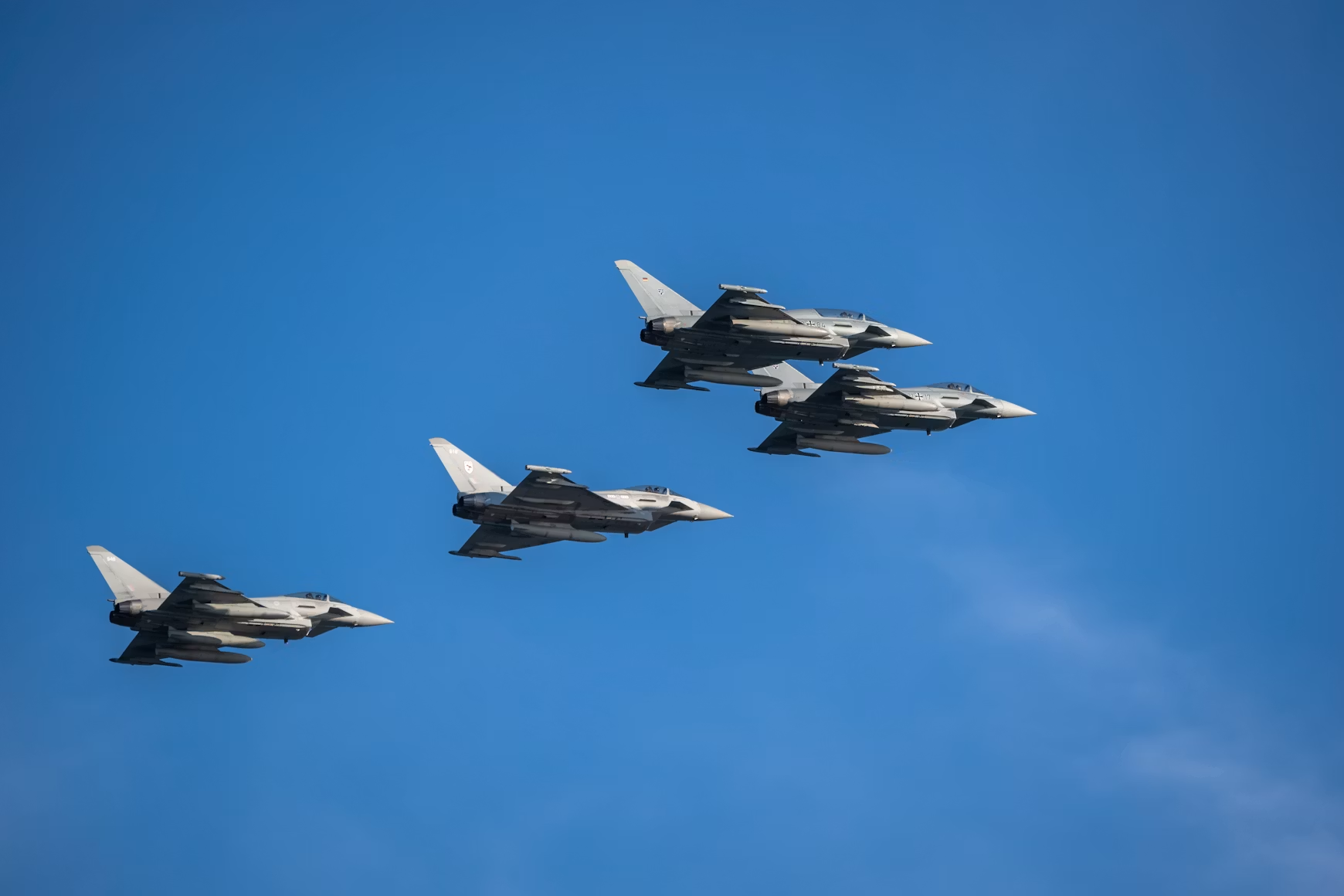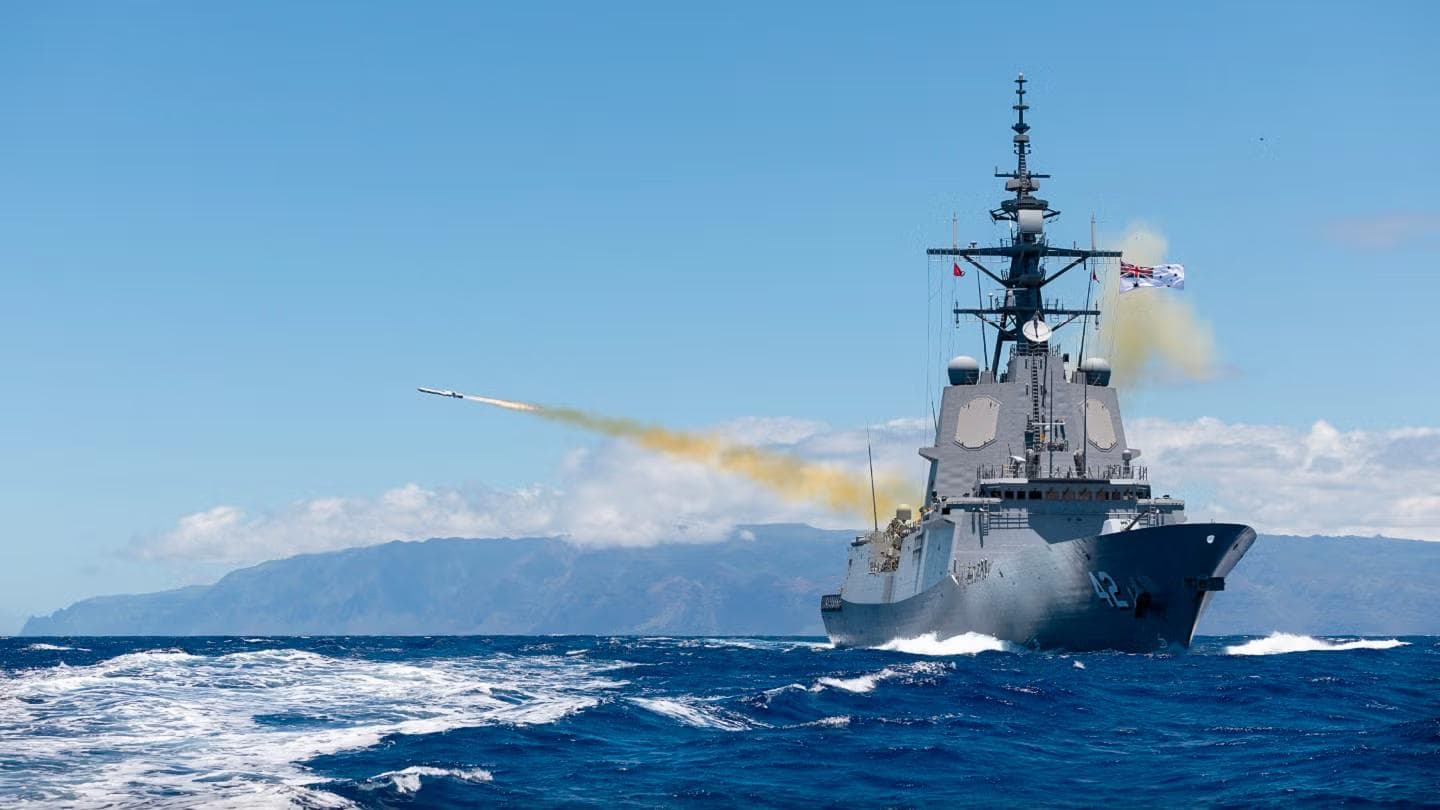


Four days ago, Australia committed to spending A$425 billion on defence over the next decade. Defence Minister Richard Marles stood at the National Press Club and outlined the 2026 National Defence Strategy: a record peacetime spending increase, a target of 3% of GDP by 2033, and a sharp focus on undersea warfare, autonomous systems, and long-range strike. The language was blunt. More countries are engaged in armed conflict today than at any point since the end of World War II.
That announcement would matter on its own. But it sits inside a much larger global pattern. The US defence budget for 2026 is US$855.7 billion. NATO allies are scrambling to meet spending targets under pressure from Washington. Defence tech startups raised US$49.1 billion globally in 2025, nearly double the prior year. And the companies attracting that capital look nothing like the defence contractors that dominated the last fifty years.
For Australian investors, this is worth understanding. Not because defence is a fashionable sector, but because the investment characteristics of the companies leading this shift are genuinely unusual, and because Australia has a direct, operational stake in how several of them succeed.
The new defence companies are not defence companies
The traditional defence industry is built on cost-plus contracts, decades-long procurement cycles, and hardware programs that routinely run over budget and behind schedule. Boeing's Orca autonomous submarine program for the US Navy has spent years and significant sums and still hasn't delivered. Australia's own experience with conventional submarine procurement tells a similar story.
The new cohort of defence technology companies operates on a fundamentally different model. They build software-defined platforms, iterate quickly, ship hardware on commercial timelines, and fund development with venture capital rather than government contracts alone.
Anduril Industries is the clearest example. Founded in 2017 by Palmer Luckey (who previously founded Oculus VR), Anduril builds autonomous systems and AI-powered defence platforms on top of its Lattice operating system. Lattice is a software layer that connects sensors, drones, command nodes, and weapons systems into a single decision-making architecture. Everything Anduril builds plugs into it. The company generated US$1 billion in revenue in 2024, doubling year on year, and its CEO has forecast US$4.3 billion for 2026. In March 2026, it raised US$4 billion at a US$60 billion valuation, nearly double the US$30.5 billion it achieved just nine months earlier.
Shield AI occupies a different but complementary position. Where Anduril builds full-stack hardware and software, Shield AI focuses on autonomy software. Its Hivemind platform is an AI pilot system that enables aircraft to navigate and make tactical decisions without GPS, communications, or human input. Hivemind has been integrated across more than fifteen aircraft types, from small quadcopters to the X-62A VISTA F-16 testbed. Shield AI raised US$2 billion in March 2026 at a US$12.7 billion valuation, a 140% increase in twelve months, on the back of its Hivemind selection for the US Air Force's Collaborative Combat Aircraft program.
These are venture-scale growth rates being applied to defence budgets measured in the hundreds of billions. The incumbents (Lockheed Martin, Northrop Grumman, Raytheon, BAE Systems) still dominate total contract value. But they grow revenue at low-to-mid single digits. The startups are growing at 80% to 138% annually. The capital is following accordingly.
Australia's direct stake in this sector
This is where the story becomes specifically relevant for Australian investors, not just thematically interesting.
Anduril has a substantial operational footprint in Australia. Its Ghost Shark program with the Royal Australian Navy is an A$1.7 billion contract to produce dozens of extra-large autonomous undersea vehicles over five years. The first production unit rolled off a purpose-built manufacturing line in Sydney ahead of schedule, and the Navy has now taken delivery of Ghost Shark vehicles, establishing a new Maritime Autonomous Systems Unit to integrate them into operational service.
Ghost Shark went from concept to prototype to production fleet in under four years. For context, comparable programs in the traditional defence procurement model take a decade or more. The contrast with Boeing's Orca XLUUV (further behind, having spent considerably more) is frequently cited as validation of the software-first approach.
More than 40 Australian small and medium enterprises are part of the Ghost Shark supply chain. Anduril has invested A$60 million of its own capital in the Sydney manufacturing facility. The program is explicitly structured as sovereign Australian capability built in Australia, with potential for export to allies pending government approval.
The 2026 National Defence Strategy reinforces why this matters. Undersea warfare, sea denial, and autonomous systems sit at the top of Australia's spending priorities, accounting for more than 60% of the new A$425 billion investment program. Anduril's products map directly onto those priorities.
And it isn't only Anduril. The broader AUKUS framework, which underpins Australia's strategic relationship with the US and UK, creates a pipeline for technology sharing and co-development across autonomous systems, AI, quantum computing, and hypersonics. Companies building the enabling technology for those capability areas stand to benefit from sustained, multi-decade procurement commitments, not one-off contracts.
The investment case (and the risks)
Here's where it gets interesting from a portfolio perspective.
Defence tech companies like Anduril and Shield AI carry valuation multiples that look more like enterprise software than traditional aerospace and defence. Anduril at US$60 billion on roughly US$2 billion in projected 2025 revenue trades at approximately 30 times revenue. Shield AI at US$12.7 billion on projected US$540 million in 2026 revenue sits at a similar multiple. For comparison, Lockheed Martin trades at around 1.7 times revenue. Northrop Grumman at roughly 1.5 times.
The premium reflects growth. But it also reflects a thesis: that the software-defined approach will capture an outsized share of defence budgets as legacy programs age out and autonomous systems scale up. The US Air Force's Collaborative Combat Aircraft program alone could be worth tens of billions over the next decade. Anduril's Fury drone is a prime contractor in that program. Shield AI's Hivemind provides the autonomous flight software. These are not speculative bets on future contracts. They are funded, active programs with production timelines.
But the risks are genuine and specific to this sector.
Procurement is political. Defence budgets are set by governments, and governments change. A shift in administration, a budget sequestration, or a change in strategic priorities can delay or cancel programs that companies have built their revenue projections around.
Scaling manufacturing is hard. The defence tech startups are transitioning from prototype and low-rate production to full-scale manufacturing. Anduril is building Arsenal-1, a US$1 billion drone and weapons manufacturing complex in Ohio. Whether these companies can execute the transition from venture-backed startup to industrial-scale producer is an open question. Manufacturing-focused defence investment rose to US$4.7 billion across 39 deals in 2025, reflecting investor recognition that this is the next critical hurdle.
Safety incidents can derail contracts. Shield AI experienced this firsthand when a US Navy service member was injured during a V-BAT drone test in 2024. The company has since tightened safety protocols, but incidents like these can slow adoption and create procurement headwinds.
The primes are not standing still. Lockheed, Northrop, and the other legacy contractors are building internal autonomy teams and acquiring AI capabilities. If they close the technology gap, they can bundle autonomy into existing platform contracts and squeeze out third-party providers. The startup advantage is speed and architectural flexibility, but that advantage erodes over time if the incumbents adapt.
Ethical considerations are real. Autonomous weapons systems raise legitimate ethical and regulatory questions. While the current political environment in the US and allied nations broadly supports autonomous defence development, public sentiment and international regulatory frameworks could shift. Companies in this sector operate under closer scrutiny than typical technology businesses, and that scrutiny could intensify.
How Australian investors can access defence tech
Anduril, Shield AI, and most of the other companies driving this sector are private. You won't find them on the ASX or on a standard brokerage platform.
For Australian wholesale and sophisticated investors, pre-IPO access through SPV structures is the most direct pathway. Platforms like NonPublic provide curated access to pre-IPO defence tech companies, including Anduril and Shield AI, alongside other private market opportunities like SpaceX, OpenAI, and Anthropic.
Palmer Luckey has said that an Anduril IPO is "definitely" on the roadmap, with 2026 or 2027 as a plausible timeframe, though the March 2026 raise at US$60 billion may push the listing closer to 2027. Shield AI's trajectory suggests a similar timeline. Investors who wait for the IPO will pay public-market prices set by institutional demand. Investors who access the secondary market now are buying at private-market valuations set by negotiated transactions.
For investors who prefer listed exposure, Palantir Technologies (NYSE: PLTR) is the closest public comparable. Palantir provides AI software for military targeting and intelligence, and it has been a meaningful beneficiary of the same geopolitical tailwinds driving Anduril and Shield AI. Its stock has performed accordingly. Beyond Palantir, the broader defence ETF universe (FITE, ARKQ, ITA) provides thematic exposure, though none hold Anduril or Shield AI directly.
If you qualify as a wholesale or sophisticated investor and want to explore pre-IPO defence tech opportunities, book an introduction call with the NonPublic team.
What this means for portfolio construction
Defence technology sits at an unusual intersection. The demand drivers are geopolitical rather than cyclical. The growth profiles resemble enterprise software. The barriers to entry are enormous (security clearances, government relationships, classified technology). And the customer base, sovereign governments with multi-decade budget horizons, provides a level of revenue visibility that most technology sectors lack.
Australia's A$425 billion commitment is not a one-year budget allocation. It is a ten-year investment program anchored by AUKUS, driven by structural changes in the Indo-Pacific security environment, and directed at exactly the capabilities that Anduril, Shield AI, and their peers are building. This spending will happen regardless of which party governs in Canberra. The bipartisan nature of Australia's defence posture makes it one of the more predictable macro tailwinds available to investors.
For those with the eligibility, the risk tolerance, and the long-term horizon, defence tech represents an asset class that barely existed five years ago and now commands tens of billions in annual venture investment. The window for pre-IPO access remains open. It won't stay open indefinitely.
NonPublic provides Australian wholesale and sophisticated investors with curated access to pre-IPO and private market investments including Anduril and other defence technology companies. To explore current opportunities, book an introduction call with our team.
This content is general in nature and does not constitute financial advice. Investing in private markets involves significant risk, including the potential loss of your entire investment. You should obtain independent financial advice before making any investment decision.
The Pre-IPO & Private Investment Marketplace for Australian Wholesale Investors
Get started today to learn how NonPublic can give you access to exclusive deals.
Get Started