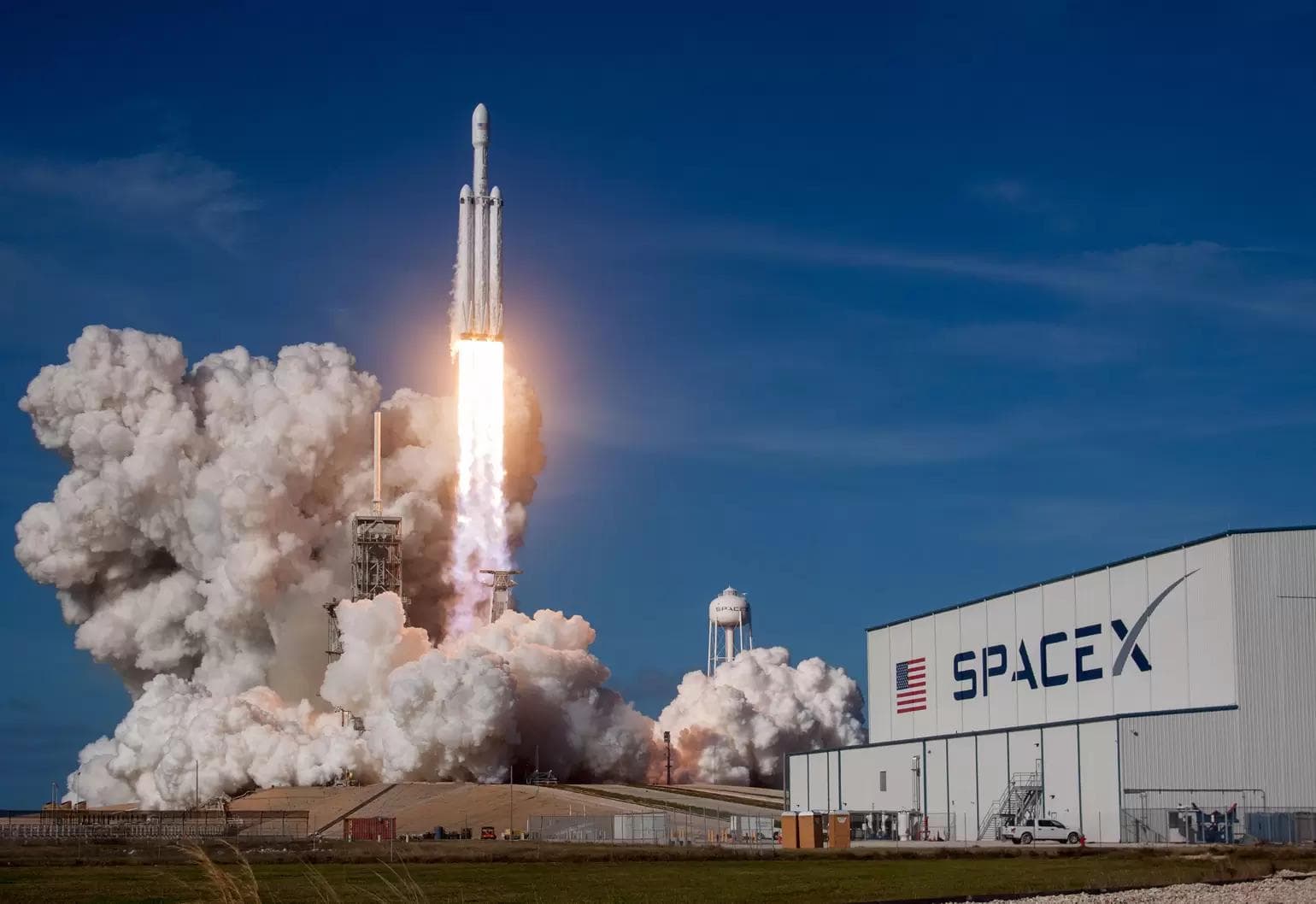


SpaceX is about to go public. After two decades as one of the world's most valuable private companies, the Elon Musk-founded aerospace giant has filed confidentially with the SEC and is reportedly targeting a mid-2026 IPO at a valuation of up to US$1.75 trillion. If the listing goes ahead at anything close to that number, it will be the largest IPO in history, comfortably surpassing Saudi Aramco's US$29.4 billion raise in 2019.
For Australian investors, the question has shifted. It's no longer whether you can invest in SpaceX. It's how, and whether the timing and structure make sense for your portfolio.
This guide breaks down the five realistic pathways available to Australian investors right now, what each one actually involves, and what you should weigh up before committing capital.
Why SpaceX matters to Australian investors
Before we get into the mechanics, some context on why this company sits in a category of its own.
SpaceX operates across three business lines that would each be significant companies in isolation. The launch division conducts roughly half of all orbital launches globally, flying a Falcon 9 mission nearly every two days. Starlink, the satellite internet network, crossed 10 million subscribers in 2025 and generated an estimated US$10.6 billion in revenue, with EBITDA margins around 54%. That's closer to a software business than an aerospace one. And then there's Starship, the next-generation super-heavy launch vehicle designed for lunar and Mars missions, with the first V3 variant test flight expected in late April 2026.
In February 2026, SpaceX also completed its acquisition of xAI, Musk's artificial intelligence company, in an all-stock deal that valued the combined entity at approximately US$1.25 trillion. That merger has added an AI premium to the valuation thesis, though whether public markets will pay for it remains an open question.
The point is: this isn't speculative early-stage venture capital. SpaceX is a profitable, revenue-generating business with defensible market positions and no serious competitor at comparable scale. That combination is what makes the investment case compelling, even at eye-watering valuation multiples.
The five pathways for Australian investors
1. Direct pre-IPO access through a private markets platform
This is the most direct route, and the one that gives you actual economic exposure to SpaceX shares. Not diluted through a diversified fund alongside dozens of other holdings.
Platforms like NonPublic provide Australian wholesale and sophisticated investors with access to pre-IPO companies including SpaceX through SPV (special purpose vehicle) structures. The way it works: the platform sources shares from existing shareholders (typically early employees, venture investors, or institutional holders looking for liquidity) and packages them into an SPV that Australian-qualified investors can participate in.
The advantages here are straightforward. You get direct economic exposure to the underlying shares. You know exactly what you own. And you're not paying a management fee on a broader portfolio of companies you didn't choose.
The trade-offs are equally clear. You need to qualify as a wholesale or sophisticated investor under Australian law (more on that below). The investment is illiquid until a liquidity event like an IPO. And minimum investment sizes tend to be higher than buying units in a listed fund.
For investors who meet the eligibility threshold and want concentrated, intentional exposure to SpaceX specifically, this is the cleanest path. If you're unsure whether you qualify, book an introduction call with the NonPublic team to walk through your options.
2. ASX-listed investment trusts with SpaceX exposure
If you want SpaceX exposure through your existing ASX brokerage account, the Pengana Private Equity Trust (ASX: PE1) is the most prominent option.
PE1 is managed by GCM Grosvenor, one of the world's largest alternative asset allocators, and it holds a diversified portfolio of over 550 private companies. As of late February 2026, SpaceX represented approximately 14% of PE1's underlying portfolio, making it the trust's largest single position by a significant margin. The trust first invested in SpaceX in late 2020 when the company was valued at US$50 billion, so early unitholders have done very well on that particular allocation.
There are a few things to understand about PE1's structure. It's a closed-ended listed investment trust, which means its unit price on the ASX can (and does) trade at a discount or premium to the net asset value of its underlying holdings. As of early 2026, PE1 was trading at a discount to NAV of around 30%. Depending on your perspective, that's either a buying opportunity or a structural feature of the vehicle that suppresses your returns.
PE1 also pays a target distribution yield of 4% per annum on NAV, which is unusual for a private equity vehicle. And because it holds over 550 companies, your effective SpaceX exposure as a percentage of your capital deployed is significantly diluted compared to a direct pre-IPO investment.
3. US-listed ETFs with private SpaceX holdings
Several US-listed ETFs now hold SpaceX shares directly or through SPV structures, and Australian investors can access these through platforms like Stake, Interactive Brokers, or CMC Markets.
The ERShares Private-Public Crossover ETF (XOVR) is the most established, with SpaceX as its top holding and assets under management approaching US$1.5 billion. It charges a 0.75% expense ratio and holds a mix of public growth companies alongside its private allocations.
The KraneShares Artificial Intelligence and Technology ETF (AGIX) takes a different approach, holding roughly 3.5% in SpaceX alongside a similar allocation to Anthropic, within a broader AI-focused portfolio. It charges 0.99% and manages around US$176 million.
The newer Tema Space Innovators ETF (NASA), which launched in March 2026, offers a more concentrated space-industry thesis with approximately 15% allocated to SpaceX through an SPV structure.
There are structural nuances worth understanding with these vehicles. Some hold SpaceX shares directly; others use SPVs that add an additional layer of fees and complexity. Private holdings inside ETFs are valued periodically rather than in real time, which means the NAV may not reflect the most current secondary-market pricing. And because US regulations limit illiquid holdings to 15% of an ETF's assets, significant redemptions can push SpaceX allocations above that threshold (as has already happened with at least one fund) creating regulatory and concentration risk.
4. Waiting for the IPO
If the current timeline holds, SpaceX could begin its investor roadshow in early June 2026, with a Nasdaq listing potentially following later that month. Unusually, SpaceX is reportedly considering allocating up to 30% of IPO shares to retail investors, roughly three times the typical allocation. That would give individual investors a much larger window than is standard for offerings of this size.
Morgan Stanley, Bank of America, Citigroup, JP Morgan and Goldman Sachs are leading the deal, with 16 additional banks handling institutional, retail and international distribution. Australian investors with access to US brokerage accounts would theoretically be able to participate in the IPO allocation or buy on the secondary market immediately after listing.
The risk with waiting, of course, is price. At a US$1.75 trillion valuation, SpaceX would debut at roughly 110 times its 2025 revenue. That's nearly four times the price-to-sales ratio Meta Platforms carried at its own IPO. History suggests that mega-IPOs of this scale rarely reward early buyers; of the five largest IPOs ever, only Meta has gone on to outperform the broader market over the long term, and even it traded below its IPO price for over a year.
There's also the question of whether the xAI merger premium will survive contact with public-market scrutiny. If investors are sceptical about the AI valuation layer, the stock could price below the US$1.75 trillion target.
5. Indirect exposure through listed space and defence companies
This is the least direct path, but it's worth mentioning for completeness. Several publicly listed companies operate in adjacent parts of the space economy and benefit from similar secular tailwinds.
Rocket Lab (NASDAQ: RKLB) is the most frequently cited SpaceX competitor, though its launch capacity and revenue base are orders of magnitude smaller. L3Harris Technologies (NYSE: LHX) provides space and defence technology solutions including solid rocket motors and satellite systems. AST SpaceMobile (NASDAQ: ASTS) is building a space-based cellular broadband network.
None of these are SpaceX substitutes. But for investors who want thematic exposure to the commercial space economy without the complexity of private-market access, they offer a liquid, publicly traded alternative.
Who qualifies? Understanding Australian wholesale investor requirements
If you're pursuing direct pre-IPO access through a private markets platform like NonPublic, you'll need to qualify as a wholesale or sophisticated investor under Australian law. The two most common pathways are under section 761G and section 761GA of the Corporations Act 2001.
Under s761G, you may qualify if you have net assets of at least A$2.5 million, or gross income of at least A$250,000 per annum over the past two financial years. These thresholds need to be verified by a qualified accountant through a certificate.
Under s761GA, you may self-certify as a sophisticated investor if you can demonstrate sufficient experience in financial products to assess the merits and risks of the investment. This pathway is more subjective and depends on the platform's assessment process.
The distinction matters because it determines which investment opportunities you can access and through which structures. If you're unsure whether you qualify, book an introduction call with NonPublic's team to walk through the eligibility assessment.
What to actually think about before investing
The excitement around SpaceX is warranted. The business is extraordinary. But extraordinary businesses can still be poor investments at the wrong price, through the wrong structure, or at the wrong time.
A few considerations worth sitting with.
Valuation discipline still applies. At US$1.75 trillion, SpaceX would trade at a multiple that dwarfs every comparable company in history. That doesn't mean the stock won't go up. Momentum and narrative can carry prices a long way. But it does mean the margin for error is razor-thin. If Starlink subscriber growth decelerates, if Starship testing hits setbacks, or if the xAI integration proves more complex than anticipated, there's a long way to fall.
Liquidity matters more than people think. Pre-IPO shares are illiquid. You cannot sell them on a whim. If you're investing through an SPV, your capital is locked until a liquidity event. Make sure the money you're deploying is genuinely long-term capital, not funds you might need in 12 months.
Structure affects returns. Not all SpaceX exposure is created equal. A direct SPV investment gives you concentrated, transparent exposure. A diversified PE fund gives you a fraction of that exposure bundled with hundreds of other companies. An ETF gives you daily liquidity but with fees, potential NAV dislocation, and regulatory constraints on private holdings. Understanding how each structure works is essential before you commit capital.
Tax is a real factor. Australian investors accessing US-listed securities need to consider foreign income tax implications, withholding tax on distributions, and potential CGT events. This isn't a reason not to invest, but it is a reason to get proper advice before you do.
Where this leaves you
SpaceX is one of a handful of companies that genuinely warrants the attention it receives. The business has structural advantages in launch economics, in satellite scale, in government relationships that are almost impossible to replicate. The IPO, whenever it lands, will be a defining moment for private markets and for the broader investment landscape.
But access and timing are everything. If you're an Australian investor who qualifies as wholesale or sophisticated, the pre-IPO window is still open, and NonPublic exists specifically to give you that access. If you'd rather wait for the public listing, that's a perfectly rational decision too, provided you're realistic about what you'll be paying.
The worst outcome is doing nothing because the options seemed too complicated. They're not. You just need to pick the pathway that matches your capital, your risk tolerance, and your conviction.
NonPublic provides Australian wholesale and sophisticated investors with curated access to pre-IPO and private market investments. To explore current opportunities including SpaceX, book an introduction call with our team.
This content is general in nature and does not constitute financial advice. Investing in private markets involves significant risk, including the potential loss of your entire investment. You should obtain independent financial advice before making any investment decision.
The Pre-IPO & Private Investment Marketplace for Australian Wholesale Investors
Book a free introduction call to learn how NonPublic can give you access to exclusive deals.
Book an Introduction Call